01
Transmission
HIV can be transmitted through blood, semen, vaginal or rectal fluids, and breast milk. It is not spread by air, water, insects, casual contact, or sharing food.
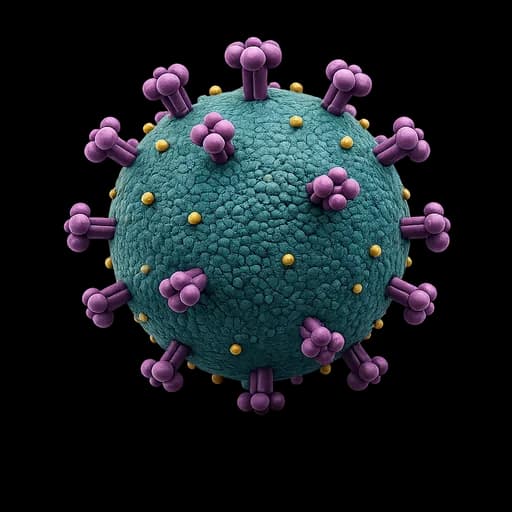
Human immunodeficiency virus type 1
A retrovirus that targets immune cells and can lead to AIDS.
HIV-1 primarily targets cells carrying the CD4 receptor.
The virus changes rapidly because replication is error-prone.
HIV testing is the only way to know whether a person has the infection.
Rotate the specimen, inspect its form, and shift into X-Ray mode.
HIV-1 attacks the immune system, especially CD4 T cells. Without treatment, progressive immune damage can lead to acquired immunodeficiency syndrome (AIDS), but modern therapy allows most people with HIV to live long, healthy lives.
HIV-1 belongs to the family Retroviridae, genus Lentivirus. It is distinct from HIV-2 and is responsible for most HIV infections worldwide.
The physical architecture and genetic material of the pathogen.
HIV-1 is enveloped and roughly spherical. Its membrane carries gp120 and gp41 proteins used for cell entry, while a cone-shaped capsid surrounds the RNA genome and viral enzymes.
Clinical presentation, risk reduction, and approaches to care.
HIV can be transmitted through blood, semen, vaginal or rectal fluids, and breast milk. It is not spread by air, water, insects, casual contact, or sharing food.
Early infection may cause a brief flu-like illness or no noticeable symptoms. A long symptom-free period can follow, while untreated infection gradually weakens immunity and allows opportunistic infections and certain cancers to develop.
Condoms, sterile injection equipment, regular testing, pre-exposure prophylaxis (PrEP), and post-exposure prophylaxis (PEP) reduce risk. Effective treatment during pregnancy and breastfeeding greatly lowers transmission to infants.
Combination antiretroviral therapy blocks HIV at several stages of its life cycle. Treatment does not eliminate the integrated virus, but it can reduce blood virus levels to undetectable; people who maintain an undetectable level do not transmit HIV through sex.
Defining moments in research, discovery, and public health.
The first cases of the syndrome later called AIDS are officially reported.
Researchers isolate the retrovirus now known as HIV-1.
Effective combination antiretroviral therapy transforms HIV care.
HIV becomes a permanent part of an infected cell’s genetic material through integration.
The viral capsid is shaped like a cone rather than a regular icosahedron.
Studying rare people who naturally control HIV has revealed important clues about protective immune responses.
Reference annotations have not yet been added to this lesson record.